School Floor Sanding in Edmonton N18
School floor sanding in Edmonton N18 requires more than removing scratches and applying a fresh coat of lacquer. In busy primary schools, nurseries, academies and secondary schools, timber floors take constant punishment from classroom furniture, muddy footwear, cleaning chemicals and hundreds of pupils moving between lessons. Once the protective seal wears through, exposed timber absorbs moisture and dirt, loose parquet blocks become trip hazards, and routine cleaning no longer leaves the floor properly hygienic.
Edmonton Floor Sanding provides specialist School Floor Restoration in Edmonton, covering classrooms, assembly halls, corridors, libraries, dining areas and timber sports floors. We assess the condition of the boards, existing coatings, subfloor and traffic patterns before recommending any work. The aim is to retain sound original timber, deal with underlying defects and specify a finish that stands up to daily institutional use.
Whether your premises occupy an older school building off Fore Street or a modern educational facility near Silver Street, we can plan the work around your timetable. Our approach to School Floor maintenance in Edmonton includes preventative inspections, localised repairs and scheduled recoating, while School Floor Refinishing in Edmonton deals with worn lacquer, surface discolouration and heavily trafficked timber. Call 0800 335 7565 to discuss your floor and the available access window.
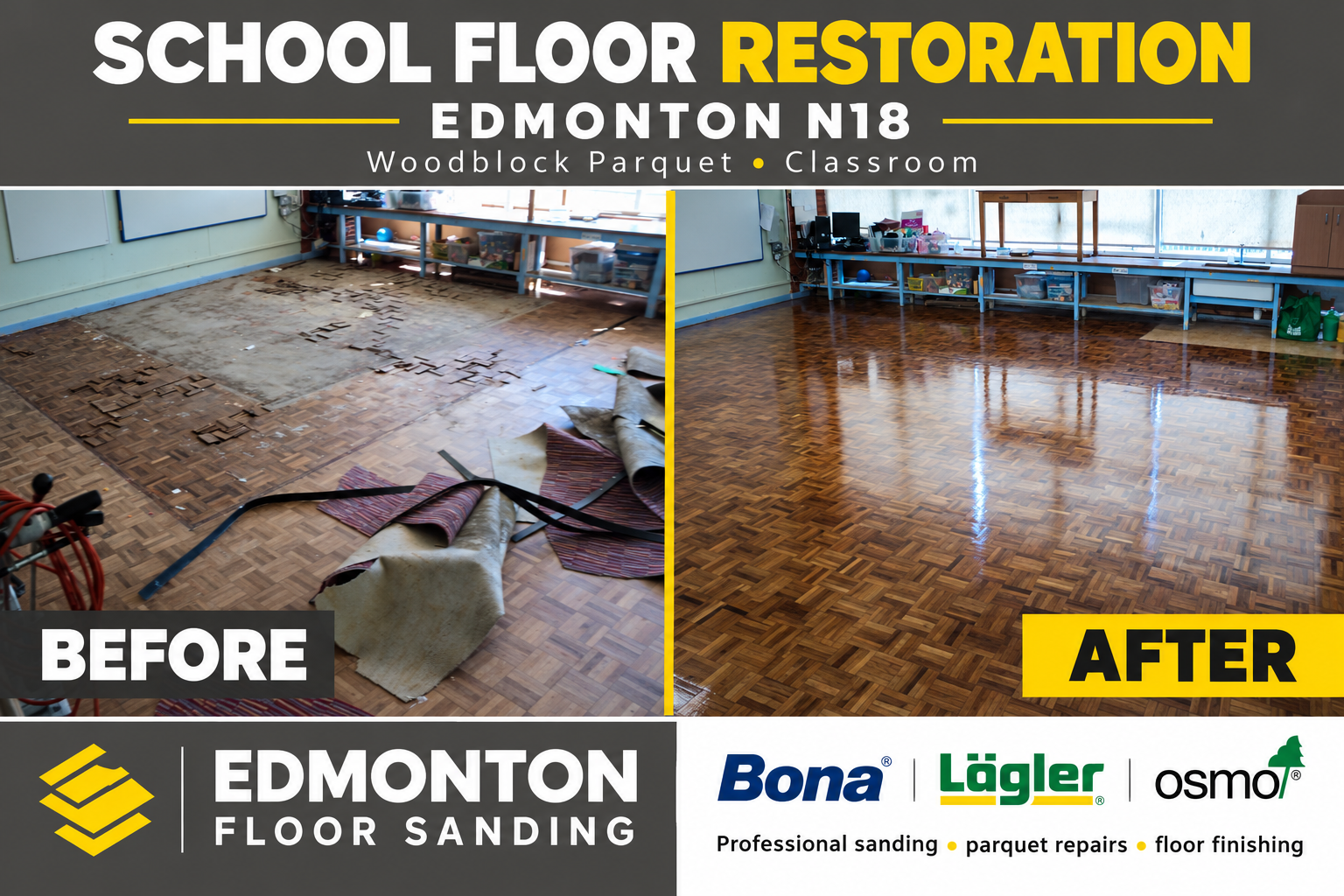
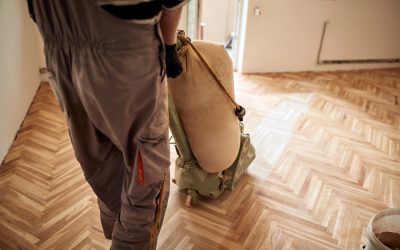
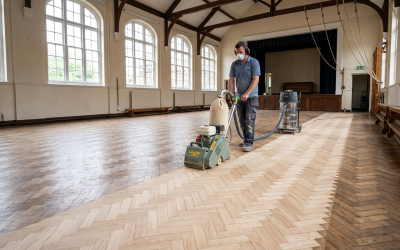
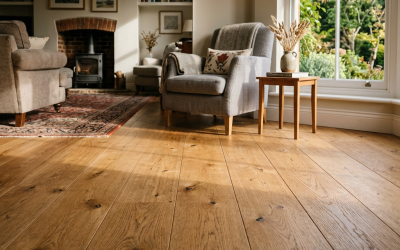
School floor sanding and parquet restoration in Edmonton N18 – see the transformation from damaged, loose woodblocks to a beautifully refinished classroom floor.
School Timber Floors in Edmonton N18: Understanding the Wear Before Sanding
A classroom floor does not wear like a domestic lounge. Chair legs repeatedly abrade the same areas, corridor traffic produces narrow wear tracks, and assembly halls are exposed to concentrated loads from tables, staging and movable seating. Frequent damp mopping, particularly with unsuitable alkaline detergents, can gradually compromise an ageing lacquer film and leave joints vulnerable to moisture.
Around Angel Edmonton, Fore Street and the surrounding residential streets, educational premises can include Victorian conversions, Edwardian institutional buildings, post-war school blocks and more recent extensions. Older floors may contain narrow pitch-pine boards, quartersawn oak strip flooring or traditional parquet, while some later interiors incorporate teak or engineered timber. Each demands a different approach to sanding pressure, repair materials and finishing chemistry.
We pay particular attention to buildings around the Fore Street Edmonton Conservation Area, where older joinery and timber floors may have been altered several times. Previous sanding, patch repairs and incompatible sealants can leave a floor with very little usable timber above the tongue or parquet joint. Taking another heavy cut without checking the remaining thickness can shorten the floor’s life considerably.
Why Domestic Floor Products Are Not Suitable for Every School
Off-the-shelf floor polish may temporarily improve the appearance of tired boards, but it cannot reinstate a breached polyurethane coating or secure loose parquet. Some silicone-based polishes also contaminate the surface, creating adhesion problems when a professional lacquer is applied later. A domestic single-component finish may be perfectly adequate in a spare bedroom but is not automatically fit-for-purpose in a school corridor or dining hall.
In nurseries and early-years facilities, hygiene and safe cleaning are equally important. A glossy floor is not necessarily a safe floor, and excessive polishing can make slip performance less predictable, particularly when water is tracked in from outside.
Common Structural and Safety Problems
- Open board joints: Gaps collect food debris, grit, dust and moisture, making effective cleaning more difficult.
- Loose parquet blocks: Failed adhesive beds allow individual blocks to rock, lift or break at their edges.
- Worn lacquer: Unprotected timber absorbs spills, develops dark staining and becomes harder to sanitise.
- Raised boards and splinters: Localised movement can create snagging and trip hazards for pupils and staff.
- Poor slip resistance: Inappropriate coatings, polish residue and contaminated surfaces can increase slipping risks.
- Moisture ingress: Leaking entrances, repeated wet cleaning and damp subfloors can lead to cupping, adhesive failure and timber movement.
- Uneven previous repairs: Mismatched blocks, exposed fixings and excessively sanded boards can leave unsafe changes in level.
Our Five-Step Commercial School Floor Restoration Process
Proper school floor restoration begins with identifying the cause of deterioration rather than simply sanding away the evidence. We separate structural repairs from cosmetic work and agree the treatment specification before machines are brought onto site. This helps avoid unnecessary timber removal and unexpected disruption once the building is handed over.
Step 1: Subfloor Audit, Timber Identification and Moisture Testing
The first inspection establishes whether the floor is solid timber, engineered board, tongue-and-groove strip flooring or bonded parquet. We check the remaining wear layer, loose sections, past repairs, coating condition and visible signs of moisture damage. A small inconspicuous test area may be needed to establish how the old finish responds to abrasion.
Moisture testing is particularly important on ground-floor classrooms and older institutional buildings. We use appropriate timber moisture-meter readings and, where relevant, in-situ hygrometer checks to investigate subfloor conditions before adhesives or coatings are specified. The results must be considered alongside the building environment, timber construction and product manufacturer’s moisture limits.
Where boards have cupped or parquet blocks have lifted, we investigate whether the underlying problem is still active. Sanding a damp floor flat before stabilisation can produce further distortion as the timber dries. If moisture levels are unsuitable, the repair and sanding programme must wait until the underlying issue is addressed.
Step 2: Timber Repairs, Parquet Re-Bonding and Resin Gap-Filling
Loose timber is secured before sanding starts. On traditional parquet, failed blocks are lifted carefully, their backs and the substrate are cleaned, and the blocks are re-bonded using an adhesive appropriate to the timber and base. Where suitable, a silane-based flexible parquet adhesive can accommodate normal timber movement while maintaining a strong bond.
Damaged pitch-pine boards, oak strips or parquet fingers are repaired or replaced with closely matched timber wherever practical. On older floors, grain direction, board width, colour and wear characteristics matter just as much as species. A modern replacement that looks acceptable before sanding can stand out badly once the surrounding floor is lacquered.
Small, stable joints can be treated with a resin-slurry gap-filling system using suitable fine sanding dust. This produces a colour-compatible filler for narrow cracks and minor surface defects. Wide or seasonally moving gaps require a different solution, such as properly fitted timber slivers or compatible flexible filling materials; rigid resin filler should not be forced into joints that are expected to move.
Step 3: Lägler Hummel Sanding and HEPA H14 Dust Control
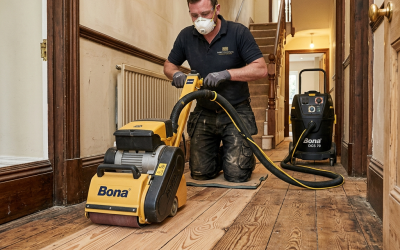
For suitable solid timber floors, a Lägler Hummel belt sander provides controlled, consistent material removal across larger areas. Abrasive grades are selected according to the existing coating, floor condition and available timber thickness, rather than using an unnecessarily aggressive first cut. Edge sanding, corner work and final surface blending are carried out separately to prevent visible changes in texture.
Where the site specification requires it, sanding equipment is supported by appropriately rated HEPA H14 dust extraction and controlled waste handling. This helps reduce the spread of fine airborne dust, but no sanding process should be described as completely dust-free. Doorway screening, ventilation arrangements, protected routes and thorough post-sanding cleaning remain essential on school premises.
Fine sanding dust can travel through open corridors, ventilation grilles and poorly sealed doorways. For that reason, work zones must be isolated from occupied teaching spaces, and dust control is checked before pupils or staff regain access. Rooms are vacuumed and inspected before any primer or finishing coat is applied.
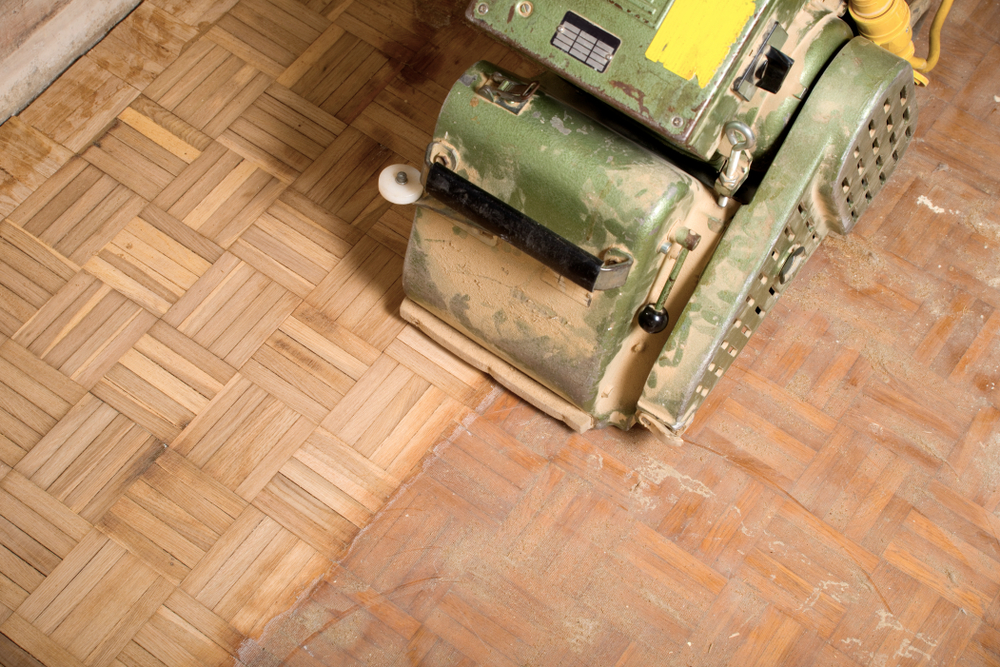
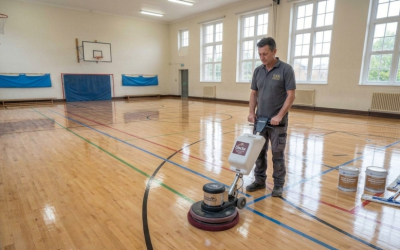
Professional school floor sanding in Edmonton N18, removing old finishes and restoring parquet flooring to a smooth, clean surface ready for refinishing.
Step 4: High-Traffic Lacquers, Hardwax Oils and Slip-Resistant Finishes
The final coating determines how well a restored floor copes with everyday school use. For busy corridors, classrooms and assembly halls, a commercial two-component waterborne polyurethane lacquer is often a practical specification. These 2K systems use a measured cross-linking hardener or catalyst to develop greater chemical and abrasion resistance than many conventional single-component coatings.
One suitable product to consider is Bona Traffic HD, a commercial waterborne polyurethane lacquer intended for heavily used timber floors. The selected primer, number of coats, mixing ratio and recoat intervals must follow the current technical data sheet. Any proposed low-emission system is checked against the actual product certification, including EMICODE EC1 or EC1 Plus where the specification calls for it.
In heritage classrooms, specialist teaching rooms and selected lower-traffic areas, a hardwax-oil system may be appropriate. Osmo Polyx-Oil Original is one example of a hardwax-oil finish that offers a more natural timber appearance and the possibility of localised maintenance. It is not automatically the preferred finish for every school corridor, and its maintenance needs and drying requirements must be considered before selection.
Slip Resistance and Relevant British Standards
Slip performance is assessed against the actual use of the space, including wet footwear, cleaning routines and the presence of vulnerable users. The older BS 7976-2 pendulum testing method has been superseded by BS EN 16165:2021, with Annex C covering the pendulum method. Where formal verification is required, a competent slip-testing provider should assess the installed finish under appropriate dry and wet conditions.
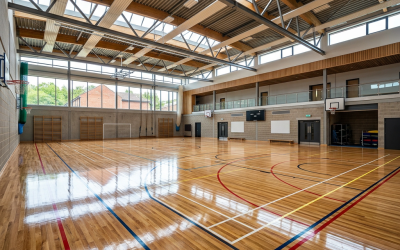
A pendulum test value of 36 or above is commonly used as an indicator of low slip potential in relevant wet-test conditions, but it is not a blanket guarantee for every application. Anti-slip additives may be incorporated where compatible with the specified lacquer, provided the resulting texture remains suitable for cleaning, traffic and any activity carried out on the floor. Sports halls require additional consideration of their intended sporting use and relevant performance standards.
Drying Times, Curing and Safe Reoccupation
A floor that feels dry to the touch is not necessarily ready for a full school timetable. Some rapid-curing commercial 2K lacquers permit light use after several hours and full traffic from around 12 hours under stated conditions, while other systems require substantially longer. Actual handover depends on the product, temperature, humidity, ventilation, coating thickness and permitted loading.
Desks, chair legs, heavy equipment, rugs and protective coverings must not be reinstated prematurely. Hardwax oils generally require a longer period of careful use while the finish develops its final resistance. We build these restrictions into the proposed access schedule rather than promising that every overnight application will be ready for pupils the following morning.
Step 5: School Floor Aftercare and Planned Maintenance
A properly restored school floor still requires regular inspection and controlled cleaning. We recommend entrance matting, suitable furniture feet, routine dry grit removal and pH-appropriate maintenance products approved for the installed coating. Strong alkaline cleaners, excessive water and repeated polish applications can undermine even a commercial-grade surface.
A planned maintenance inspection can identify worn entrances, chair-dragging damage and isolated coating failure before bare timber is exposed. Where the existing finish is compatible and sound, a clean, abrade and recoat programme may avoid another full sanding cycle. This is particularly useful for schools trying to preserve older timber floors with a limited remaining wear layer.
School Floor Sanding Across Edmonton’s Education Sector
Not every educational setting needs the same specification. A nursery playroom, science teaching area, sixth-form common room and school sports hall have different cleaning regimes, furniture loads and slip-resistance requirements. We assess the room’s function before proposing a coating or a phased programme.
Nurseries, Preschools and Childcare Centres
Nursery and preschool floors are exposed to frequent spillages, food, craft materials and regular cleaning. Low-odour products, verifiable emission characteristics, sound board joints and safe reoccupation are important considerations. The work should be arranged when children are absent, with suitable isolation and ventilation before the rooms return to use.
Primary and Secondary Schools
Primary and secondary schools usually have concentrated wear around classroom entrances, desk areas, corridors and assembly spaces. We look for loose boards beneath furniture, damaged thresholds and coating breakdown near external doors. Larger restoration works are often best scheduled during school holidays, with isolated rooms or corridors treated separately when the programme allows.
Academies, Independent Schools and Boarding Schools
Independent schools, academies and boarding schools often contain a mixture of older timber floors and modern extensions. Historic halls may require careful board matching, while more recent classroom blocks benefit from consistent commercial lacquer specifications. Boarding accommodation and evening activities may restrict working hours, so noise, deliveries and reoccupation must be agreed in advance.
Colleges, Sixth-Forms and Adult Learning Facilities
Colleges, technical institutes, vocational training centres and adult learning facilities can remain occupied outside conventional school hours. Evening courses, examinations and weekend events need to be accounted for when planning access. Sectional restoration may allow unaffected teaching rooms to remain operational while the selected work area is isolated.
Specialist Teaching and Activity Spaces
Montessori schools, special educational needs facilities, music schools, art schools, language schools, tuition centres, universities and sports academies may have additional performance requirements. These can include wheelchair movement, acoustic considerations, specialist equipment, dance or sports traction, and frequent cleaning. The finish must be selected for the particular use rather than applying one standard coating throughout an entire campus.
Out-of-Hours School Floor Sanding: Working Around the Timetable
The main difficulty on an occupied school site is often access rather than the sanding itself. A classroom cannot simply be handed back because the machines have left, and an assembly hall may still need several hours of curing before furniture can be replaced. Our proposed programme accounts for setup, protection, repairs, sanding, coating, ventilation, cleaning and safe handover.
| Working Shift | Operational Benefits | Suitable Facilities |
|---|---|---|
| Overnight | Allows preparation and selected work outside normal teaching hours. Reopening remains subject to the finish’s specified drying and curing requirements. | School corridors, entrance areas, colleges, tuition centres and restricted-access classrooms. |
| Weekend Phased | Provides a longer uninterrupted access window for repairs, sanding, coating and ventilation. | Primary schools, academies, administrative areas, libraries and selected assembly halls. |
| Sectional | Allows isolated rooms or sections to be restored while other parts of the premises remain operational. | Large schools, university buildings, educational campuses, colleges and multi-room teaching facilities. |
School holiday working is generally the best option for complete hall restoration, extensive parquet repairs and large-scale resealing. Where overnight or weekend access is proposed, we check whether the full process genuinely fits the available window. A coating’s technical cure time cannot be shortened simply to meet a Monday morning reopening.
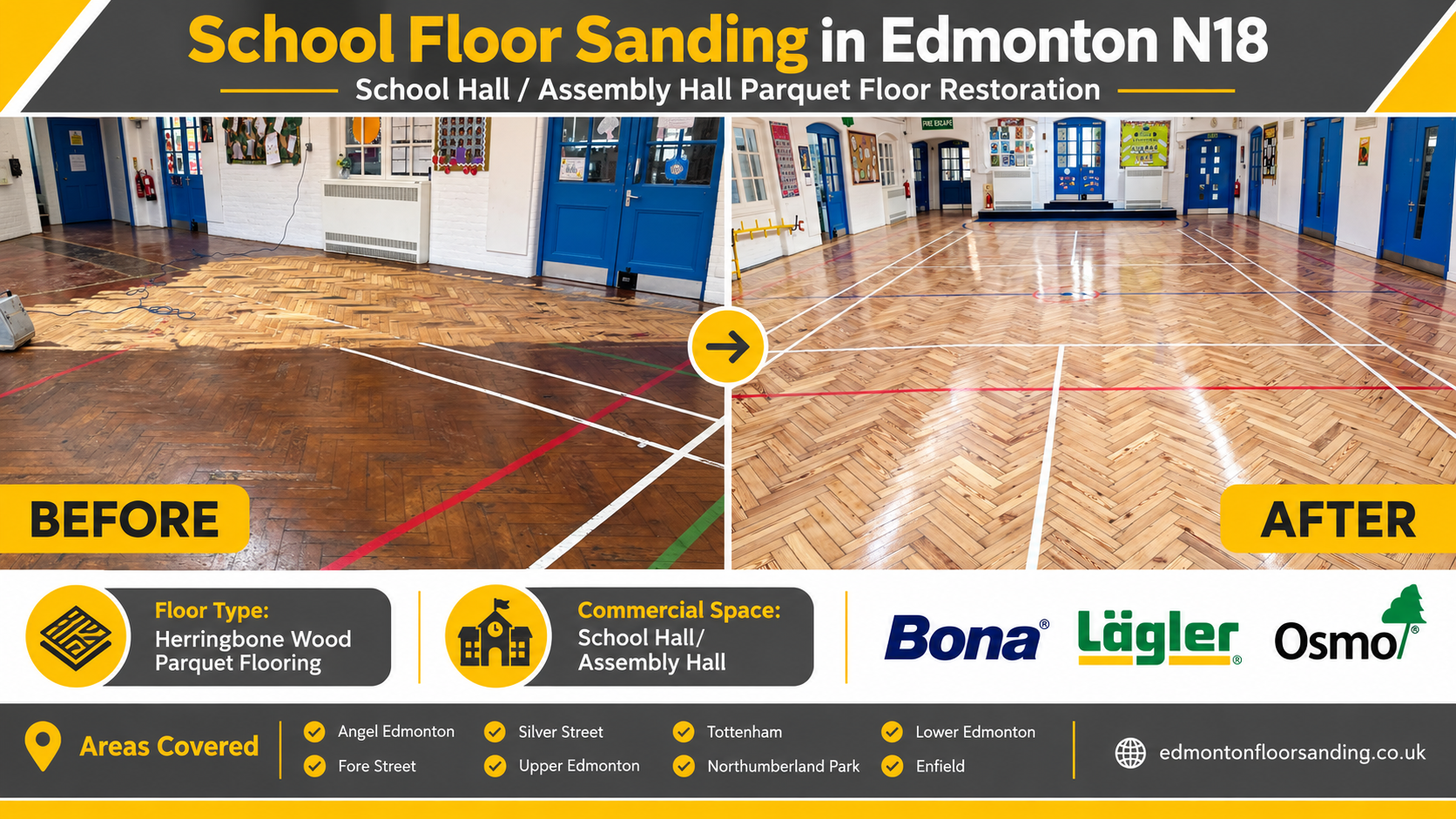
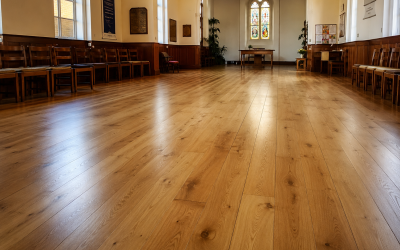
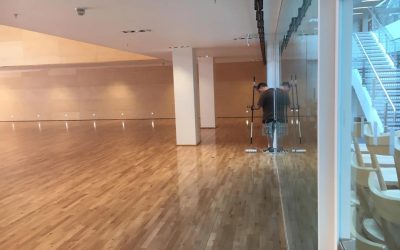
School Floor Sanding in Edmonton N18 – Before and After Herringbone Parquet Restoration in a School Assembly Hall by Edmonton Floor Sanding.
Site Access, Safeguarding and Health & Safety Documentation
Before starting on an operational educational site, the working arrangements should establish delivery routes, fire exits, waste removal, noise restrictions and the location of any occupied areas. Risk Assessments and Method Statements (RAMS) must reflect the specific work, with COSHH assessments covering the relevant coatings, hardeners, fillers, cleaning chemicals and other hazardous substances. Product safety data sheets and suitable PPE requirements form part of that assessment.
Contractors working on school premises must also follow the school’s safeguarding and visitor-access arrangements. The requirement for DBS checks, supervision and escorted access depends on the role and working circumstances, and should be agreed with the premises team. Machinery, tools, chemicals and waste must never be left accessible to pupils.
Where the site requires CSCS-carded personnel, appropriate competency evidence should be checked before mobilisation. Commercial public liability insurance details, relevant documentation and the proposed method of work should also be confirmed during procurement. These checks are particularly important where multiple contractors are working on a school refurbishment at the same time.
School Floor Restoration in Edmonton N18 and Surrounding Areas
Edmonton’s mixture of older institutional buildings, converted premises and modern teaching spaces calls for practical decisions about timber preservation. Around Fore Street, Angel Edmonton, Silver Street, North Middlesex University Hospital and the nearby streets of Upper Edmonton, existing floors can vary considerably in construction and condition. We also discuss suitable projects in neighbouring Tottenham, Northumberland Park, Lower Edmonton and the wider Enfield area.
In older buildings, especially those with suspended timber floors or historic parquet, maintaining original material is often preferable to unnecessary replacement. We check whether movement is caused by failed fixings, moisture, adhesive deterioration or structural defects before deciding on repairs. Where significant structural or damp-related defects are identified, those issues must be resolved by the appropriate specialist before restoration continues.
School Floor Sanding Prices in Edmonton N18
School floor sanding is priced according to the actual condition and scope of work, not just the number of square metres. A clear, well-maintained classroom requiring sanding and lacquer is a different proposition from an assembly hall with failed parquet adhesive, damaged blocks and several layers of old finish. Furniture removal, repair quantities, edge detailing, coating specification and restricted working hours all affect the final cost.
You can review our floor sanding prices for general guidance. Commercial school work should be assessed individually, particularly where out-of-hours access, specialist coatings or extensive repairs are involved. A written quotation should distinguish core sanding and finishing from any separately identified remedial work.
What We Need to Prepare an Accurate Quote
- Approximate floor area in square metres and the number of rooms.
- Photographs showing the overall floor and close-ups of damaged areas.
- Details of the timber flooring, if known, and any previous coatings.
- Information about loose boards, gaps, moisture damage or previous repairs.
- Proposed access dates, school holidays and permitted working hours.
- Requirements for furniture moving, low-emission coatings or documented slip testing.
- Any floor plans, site rules or contractor documentation required by the school.
Photographs and measurements allow an initial assessment, but a physical site survey is the sensible approach for larger or technically complicated work. This is where repair quantities, floor construction, access constraints and finishing requirements can be checked before the quotation is finalised.
For examples of timber floor sanding and restoration finishes, visit our floor restoration gallery. The images can also help when discussing preferred timber tones, lacquer sheen and the appearance of repaired sections.
Why Choose Edmonton Floor Sanding for Educational Premises?
School flooring work needs a contractor who understands timber behaviour and the practical restrictions of a live commercial site. The important questions are whether the existing floor can be safely restored, which repairs are necessary, how the selected finish will perform and when the space can genuinely return to use. An attractive final photograph means little if the parquet starts lifting again or the coating fails under routine cleaning.
Edmonton Floor Sanding offers timber sanding, repairs and refinishing for domestic and commercial premises, including schools and halls. Our approach is to specify the work around the floor’s condition and intended use, rather than assume that every timber floor needs the same abrasive sequence or lacquer system.
Practical Standards for Commercial Projects
- Timber-first assessment: Identify the species, construction, wear layer and repair requirements before sanding.
- Professional equipment: Use suitable belt, edge and finishing machinery with effective dust-control procedures.
- Product-led specification: Select coatings and adhesives according to traffic levels, timber compatibility, environmental conditions and technical data.
- Site documentation: Agree applicable RAMS, COSHH information, insurance evidence and operative competency requirements before commencement.
- Clear quotation: Provide an initial assessment from photographs or video, followed by a site survey where necessary.
- Realistic handover: Confirm cleaning, ventilation, furniture restrictions and minimum reoccupation times.
- Long-term maintenance: Explain how to preserve the finish and recognise when a maintenance recoat is due.
Frequently Asked Questions About School Floor Sanding in Edmonton
Can school floors be sanded during half-term or the summer holidays?
Yes. School holidays usually provide the most practical opportunity for extensive sanding, timber repairs and multiple lacquer coats. The required programme depends on the area, floor condition, coating system and environmental conditions during application.
Can a classroom be sanded and ready for use the following day?
Sometimes, provided the preparation is straightforward and the selected coating system permits the proposed reopening time. Commercial lacquers have different drying, light-use and full-cure requirements. We would not recommend putting furniture and pupils back onto a floor before the relevant technical conditions have been met.
Is dust-controlled sanding safe for an occupied school?
Professional dust extraction reduces airborne contamination, but it does not eliminate every particle or remove the need for segregation. Suitable work-zone isolation, ventilation, cleaning and safeguarding arrangements are essential. Sanding should not be undertaken in spaces accessible to pupils or other unauthorised occupants.
Should an old parquet floor be replaced or restored?
Restoration is often worthwhile if the blocks are sufficiently thick, generally sound and free from unresolved moisture problems. Loose areas can sometimes be lifted and re-bonded, with missing blocks replaced using matched timber. Extensive subfloor failure or insufficient remaining timber may make replacement the more sensible option.
Which finish is best for a busy school corridor?
A suitable commercial 2K waterborne polyurethane lacquer is often a strong starting point because of its abrasion resistance and practical maintenance characteristics. The final choice must also account for slip performance, cleaning methods, coating compatibility and reoccupation requirements. A hardwax-oil finish may be preferable in other settings where localised maintenance and a natural appearance are priorities.
Do you provide floor maintenance without full sanding?
Maintenance options can include inspection, professional cleaning, localised repairs and an abrade-and-recoat treatment where the existing finish is sufficiently sound and compatible. This avoids unnecessary removal of timber. Floors with widespread bare patches, deep contamination or failed coatings may still require full sanding and refinishing.
Can you work around examinations and after-school activities?
Work can be planned around agreed access periods, including evenings, weekends and school holidays. Noisy preparation and sanding should be separated from active teaching and examination areas. The programme must also allow sufficient drying and curing time before the restored rooms are reopened.

Arrange a School Floor Sanding Survey in Edmonton N18
Worn lacquer, loose parquet or damaged classroom boards are easier to deal with before moisture and heavy traffic cause further deterioration. Whether you manage one nursery room, a primary school hall or several teaching blocks, we can discuss a sensible repair and refinishing specification that fits your building and available access dates.
Call 0800 335 7565 to explain the condition of your floors and arrange the next step. You can also ask about sending site photographs, a short video or floor plans by WhatsApp or email through our contact page.