Commercial Floor Sanding in Edmonton N18
Commercial timber floors in Edmonton N18 take a harder beating than floors in most houses. Office chairs, delivery trolleys, restaurant grease, tracked-in grit, gym traffic and repeated cleaning chemicals eventually cut through the protective lacquer and expose the timber underneath.
We carry out commercial floor sanding and restoration across Edmonton for offices, shops, restaurants, warehouses, schools, places of worship, clinics, hotels and other working premises. The job is planned around access, shutdown periods, dust control and realistic curing times rather than treating a busy commercial floor like an empty domestic lounge.
Where sanding forms part of a wider refurbishment programme, we can also assess requirements for Commercial Floor Restoration in Edmonton, scheduled Commercial Floor maintenance in Edmonton and periodic Commercial Floor Polishing in Edmonton. Call 0800 335 7565 to discuss the floor area, access restrictions and operating hours before arranging a site survey.
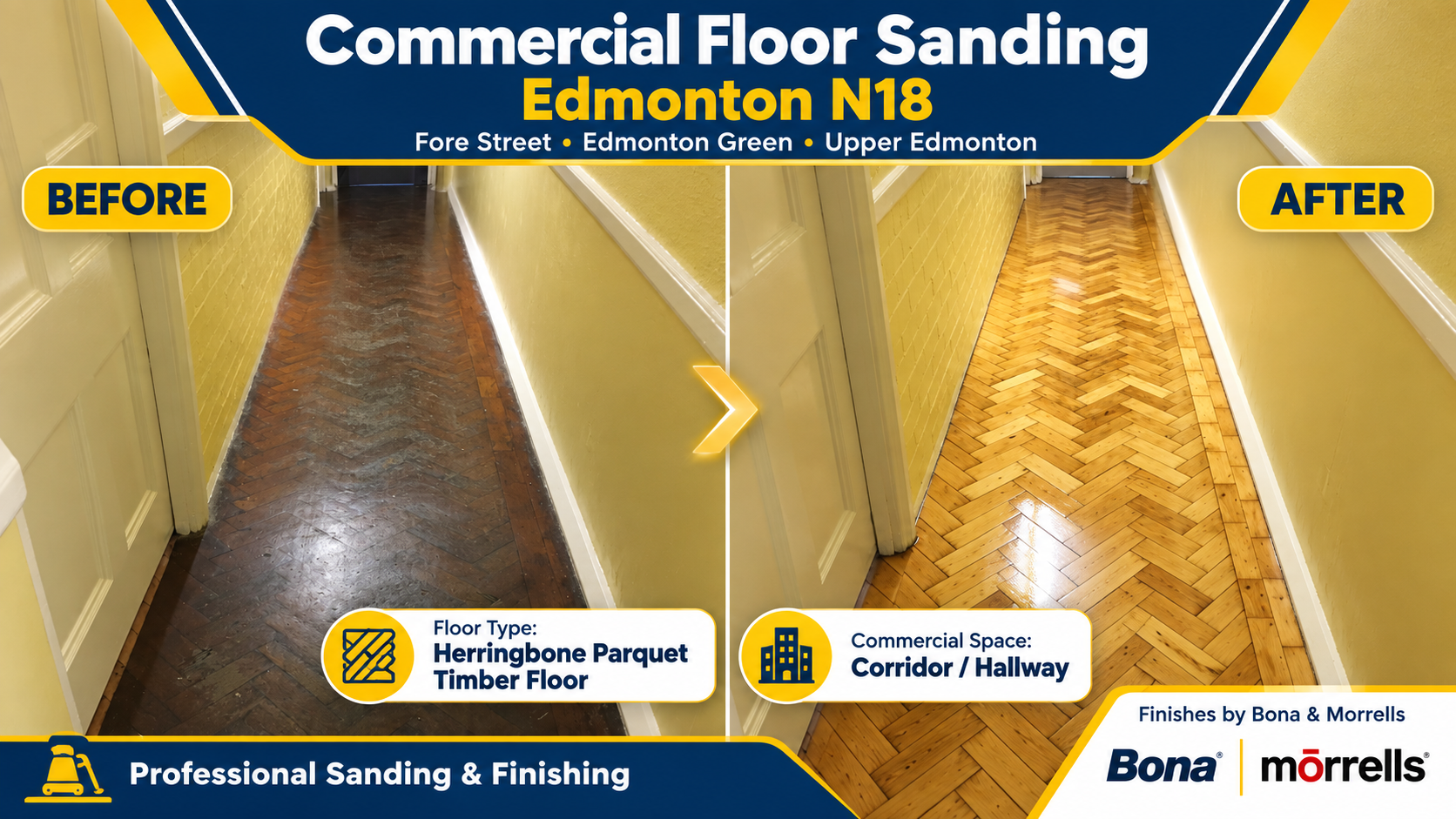
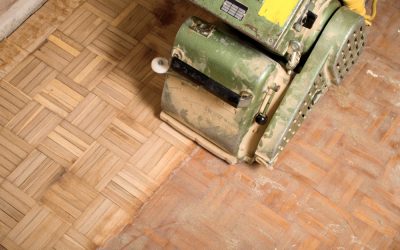
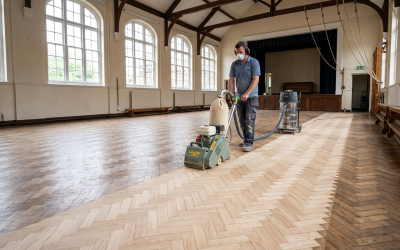
Before and after restoration of a worn herringbone parquet timber floor in a commercial corridor in Edmonton N18, professionally sanded and refinished.
Commercial Timber Floors in Edmonton Need a Different Approach
Edmonton has a mixed commercial building stock. Around Fore Street, Edmonton Green and the Upper Edmonton corridor we regularly encounter converted Victorian and Edwardian premises, older institutional buildings, post-war retail units and heavily altered commercial interiors where several generations of flooring work may be hidden under the existing finish.
That matters because a dark, worn floor is not automatically ready to sand. Old pitch pine boards may be thin from previous sanding, quartersawn oak parquet may have loose fingers or failed bitumen beneath it, while teak and other oily timbers need careful preparation before a new coating system is selected.
Older commercial premises close to Fore Street can also contain historic joinery and floor layouts worth retaining. No. 198 Fore Street, for example, is recorded by Enfield Council as a 1930s commercial building contributing to the Fore Street Conservation Area, which reflects the varied building heritage found along this part of Edmonton.
Typical Edmonton N18 commercial sites we work with
- Private offices, coworking spaces and serviced offices
- Shops, boutiques, showrooms and shopping-centre units
- Restaurants, cafés, pubs and takeaway premises
- Factories, workshops and manufacturing units
- Storage units, distribution centres and delivery depots
- Gyms, cinemas, studios and event venues
- Hotels, hostels and serviced accommodation
- Clinics, dental practices and treatment rooms
- Schools, colleges, universities and academies
- Churches, mosques, temples and community buildings
Sector-Specific Challenges and Structural Wear
Domestic sanding methods do not transfer neatly to commercial work. A coating that performs perfectly well in a spare bedroom may fail quickly under castor chairs, wheeled stock cages, restaurant service traffic or hundreds of pairs of shoes crossing the same route every day.
Off-the-shelf floor polish is particularly poor at dealing with an already compromised coating. It may make the floor look cleaner for a short period, but it cannot re-bond loose parquet, restore a worn-through lacquer film or correct a contaminated timber surface.
- Open board and parquet joints: collect grit, food debris and cleaning residue and can become hygiene traps in hospitality and clinical settings.
- Loose parquet: individual blocks can rock under traffic, causing edge damage and opening adjacent joints.
- Moisture ingress: leaking appliances, entrances, basement slabs and poorly controlled cleaning can cause cupping, staining and adhesive failure.
- Slip risk: an unsuitable coating or excessive polishing can alter underfoot performance, particularly around entrances, bars, washrooms and food-service areas.
- Previous sanding: repeated aggressive sanding may leave limited wear-layer depth on engineered boards or thin historic parquet.
- Chemical contamination: grease, silicone, maintenance products and old waxes can interfere with lacquer adhesion.
- Heavy point loading: shelving, gym equipment and machinery can loosen boards or compress damaged subfloor areas.
- Movement at thresholds: timber-to-tile and timber-to-concrete junctions often fail first where trolleys repeatedly cross them.
Where slip resistance is safety-critical, the finished floor should be considered as part of the site’s wider risk assessment. The Pendulum Test described in BS 7976 is the recognised UK method for measuring floor slip resistance, and testing can be specified where an objective result is required.
Our Commercial Floor Restoration Process
Step 1: Subfloor Audit and Moisture Testing
We begin with the structure rather than the sanding machine. The survey looks at timber type, construction, previous finishes, existing repairs, floor movement, wear depth, perimeter expansion and any evidence of moisture coming from the building or subfloor.
Timber moisture readings are checked where required and suspicious concrete or screeded areas can be investigated using appropriate hygrometer testing. Applying a low-permeability coating over an unresolved moisture problem simply traps the problem under a more expensive finish.
We also establish whether the floor is solid strip timber, parquet, mosaic, engineered flooring or a mixed repair job. Pitch pine needs a different approach from dense quartersawn oak, and oily species such as teak require careful coating compatibility checks.
Step 2: Timber Repairs, Re-bonding and Resin Gap-Filling
Loose parquet is dealt with before sanding wherever access allows. Failed blocks can be lifted, old friable adhesive removed and suitable units re-bonded using a flexible silane-based parquet adhesive rather than relying on surface filler to hold structural movement together.
Damaged boards are repaired or replaced with timber selected to match the existing dimensions and species as closely as practical. In older Edmonton floors this can involve matching aged pine, pitch pine or oak rather than dropping in pale modern softwood that immediately stands out.
Stable fine gaps can be treated using a resin-slurry filling method made with clean sanding dust from the floor. Wide moving joints, perimeter expansion gaps and structurally active cracks are not blindly packed with resin, because rigid filling in the wrong location usually breaks out again.
Step 3: HEPA Dust-Controlled Sanding and Surface Preparation
For open commercial areas we use professional belt-sanding equipment such as the Lägler Hummel, followed by edging and progressive finishing machinery according to the floor type. Abrasive grades are selected from the condition of the existing coating rather than starting unnecessarily coarse and removing more timber than required.
Dust is controlled at source using high-capacity extraction with HEPA H14 filtration where the site specification requires it. This is particularly important in clinics, offices, schools, hospitality premises and multi-tenant buildings where airborne dust cannot simply be allowed to migrate through corridors or ventilation routes.
Wood dust is controlled under COSHH procedures, with extraction, suitable respiratory protection where required and segregation of the work area incorporated into the RAMS. HSE guidance treats sanding-generated wood dust as a hazardous substance requiring effective exposure control.
Between abrasive stages we inspect for drum marks, edging swirls, raised filler and residual contamination. The final preparation grade is matched to the chosen coating system because excessively polished timber can reduce mechanical key, while sanding too coarsely can remain visible through clear lacquer.
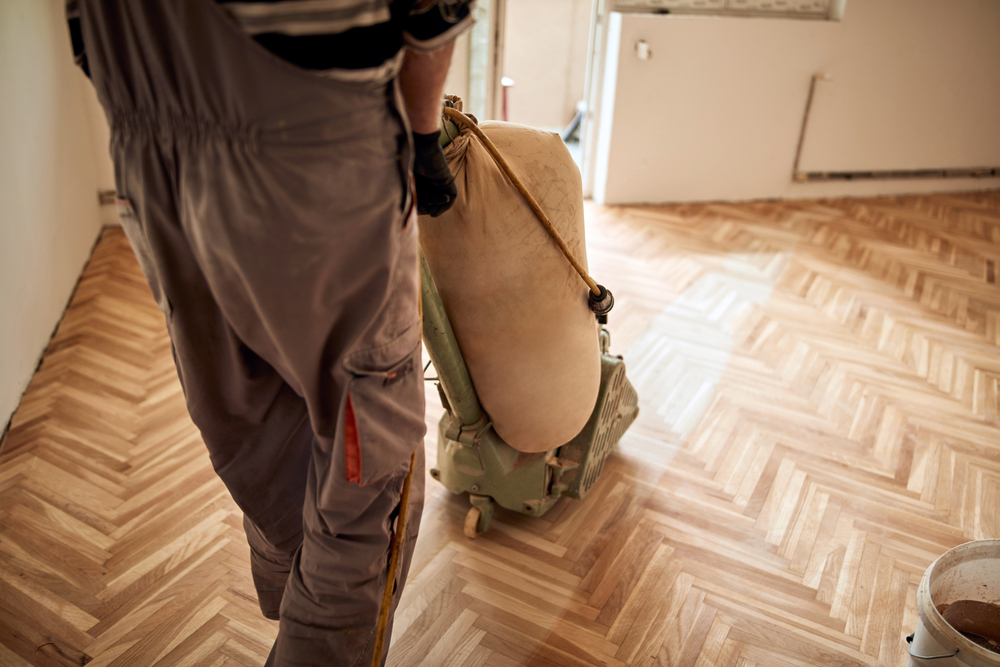
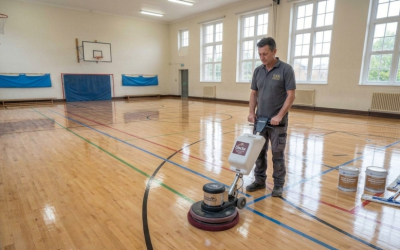
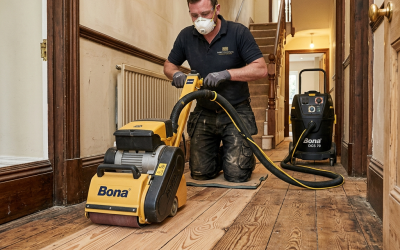
Commercial floor sanding and restoration services in Edmonton N18, restoring wooden floors to a smooth, professional finish.
Step 4: High-Traffic Finishes
The finish is chosen around traffic, cleaning regime, appearance and closure time. Commercial oak flooring in an office may need a different specification from pine boards in a pub, parquet in a school hall or timber flooring beside the entrance to a restaurant.
For high-traffic applications we commonly specify professional 2K waterborne polyurethane systems. The hardener or cross-linking catalyst chemically strengthens the cured coating film, giving substantially better wear and chemical resistance than a basic single-component domestic varnish.
Where indoor-air requirements are particularly important, low-emission primers, adhesives and coating components can be selected, including products carrying EC1 Plus classifications where suitable. EC1 Plus is an EMICODE classification for products meeting stringent emissions limits rather than a general marketing description for any water-based product.
Hardwax oil may be appropriate where the client wants a natural appearance and the ability to carry out local maintenance, but it is not automatically the right answer for every commercial floor. Restaurants with frequent wet cleaning, heavily trafficked entrances or facilities requiring aggressive cleaning products may be better served by a compatible commercial lacquer system.
Where slip resistance is a defined project requirement, we can discuss coating systems designed to provide additional surface grip. The required performance should be agreed against how the floor is actually used rather than simply describing a coating as “non-slip”.
Step 5: Aftercare and Maintenance Protocols
A newly coated floor should not be handed back as though the job ends when the final roller pass is finished. We issue practical guidance covering initial cure, routine cleaning, chair protection, entrance matting and the point at which maintenance coats should be considered.
A floor can be dry enough for careful foot traffic while the coating is still developing its full chemical and mechanical resistance. Furniture, rugs, wheeled equipment and wet cleaning may therefore need to remain off the area longer than pedestrians.
Exact cure periods depend on the product, temperature, humidity and ventilation, so we programme reopening from the coating manufacturer’s technical data rather than promising every client that the floor will be ready the following morning. For sites requiring ongoing care, see our commercial floor maintenance service in Edmonton.
Commercial Floor Sanding Without Unnecessary Business Closure
For commercial premises, programme planning is often as important as the sanding itself. A technically excellent floor is little use if the contractor blocks a restaurant’s Friday service, traps staff behind a wet coating or leaves a retail unit unable to trade because curing time was never discussed.
Before mobilisation we agree access, isolation zones, waste removal, power requirements, security arrangements and the precise areas that must be handed back first. Out-of-hours working can be planned where building management, neighbours and site restrictions permit.
| Working Arrangement | Operational Benefit | Typical Facility Suitability |
|---|---|---|
| Overnight | Sanding and coating carried out after normal trading or staff hours, with carefully planned handover and curing periods. | Offices, shops, clinics, restaurants, cafés and customer-facing premises. |
| Weekend Phased | Larger areas divided across weekends so departments or trading areas can remain operational during the working week. | Schools, offices, academies, medical premises and multi-floor commercial buildings. |
| Sectional | Work zone isolated while adjacent parts of the facility remain in use, reducing total shutdown. | Warehouses, hotels, gyms, places of worship, large offices and event facilities. |
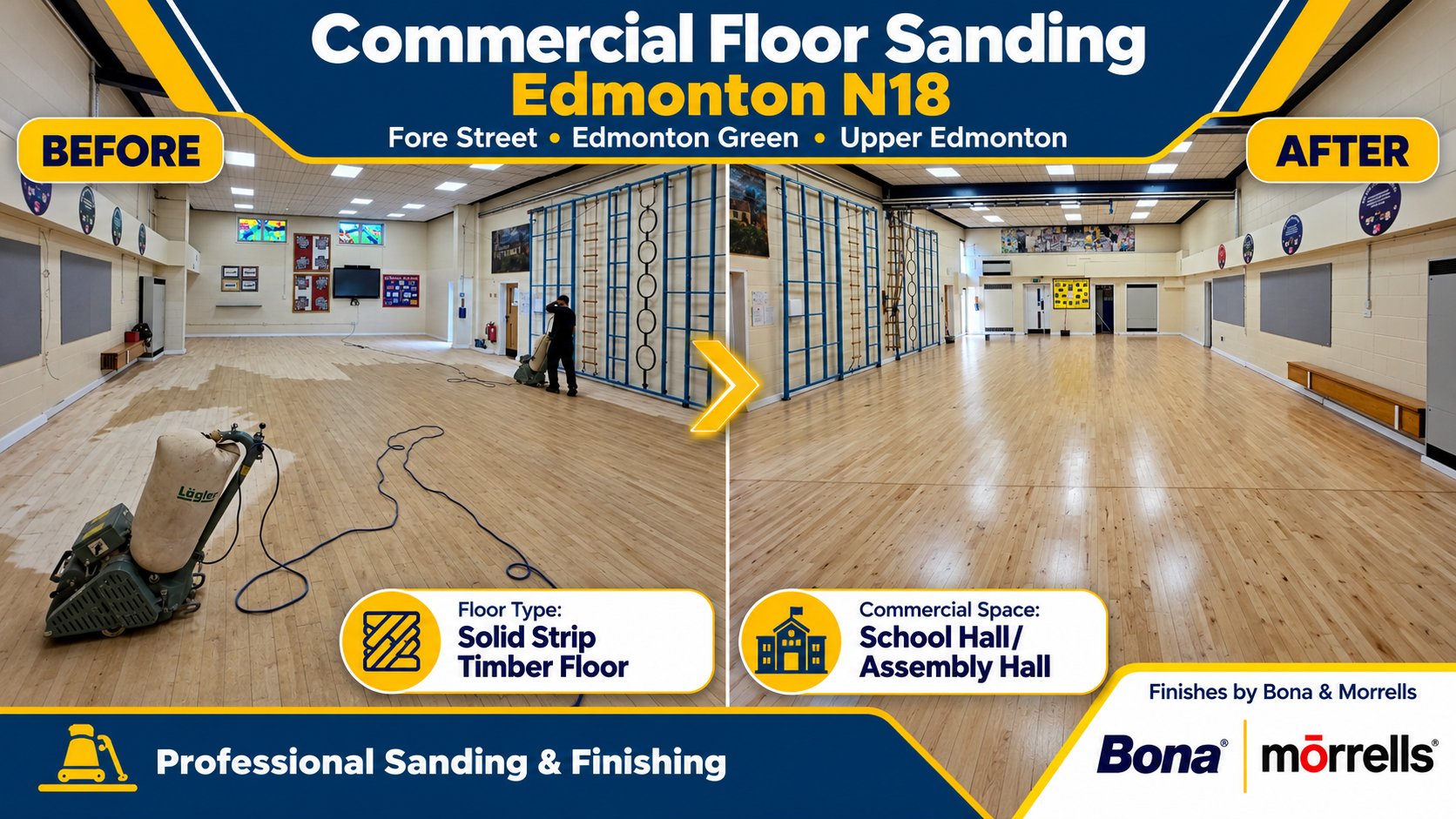
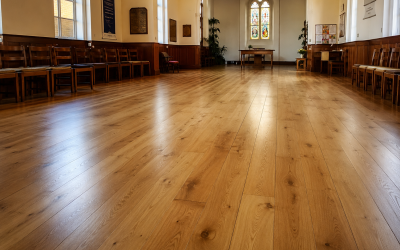
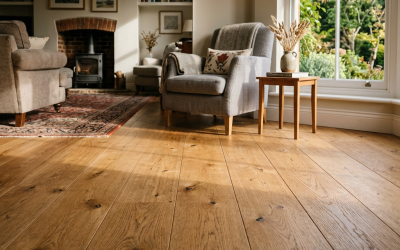
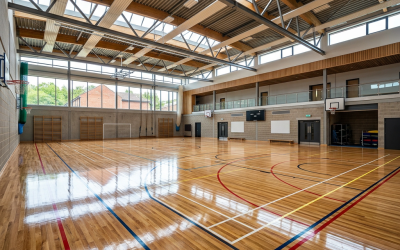
Before and after commercial sanding and refinishing of a solid strip timber floor in a school and assembly hall in Edmonton N18.
Floor Sanding for Edmonton Offices and Coworking Spaces
Office floors normally show their worst wear beneath desk chairs, reception routes, kitchen entrances and main circulation lanes. Clear coatings can look reasonably sound around the perimeter while the centre of the floor has already worn back to bare timber.
Where staff need to remain in the building, floors can be divided into controlled working zones. Desks, data cabling, floor boxes and furniture movements are reviewed in advance so a night or weekend programme does not turn into an unplanned office clearance.
Shops, Boutiques and Edmonton Retail Units
Retail timber floors suffer concentrated entrance wear from street grit and moisture, particularly where customers walk directly in from busy pavements. Display stands and counters also produce obvious colour differences because exposed areas age while covered timber remains relatively unchanged.
Sanding can substantially reduce that contrast, although deep UV colour change cannot always be removed without sacrificing excessive timber thickness. The objective is a commercially presentable, durable floor with enough remaining material for future maintenance rather than chasing every mark at any cost.
Restaurants, Cafés, Pubs and Food-Service Floors
Hospitality floors are frequently contaminated with grease, sugars, drink spillages and strong cleaning chemicals. Areas around the bar, kitchen threshold and service routes usually deteriorate much faster than customer seating areas.
We check contamination before specifying the finish because coating over residual polish, silicone or ingrained grease can cause adhesion failure. Where hygiene and repeated wet cleaning matter, joint condition and coating resistance need as much attention as colour and sheen level.
Schools, Colleges, Academies and Community Buildings
Assembly halls and teaching spaces often contain excellent old parquet that has survived decades of use beneath repeated coats of lacquer or polish. These floors can usually be retained, but loose blocks, heating-related movement and previous patch repairs need to be corrected before refinishing.
Work is commonly programmed around weekends and holiday closures. RAMS, COSHH documentation, controlled access and dust management can be prepared for the site manager or principal contractor before work starts.
Churches, Mosques, Temples and Large Halls
Places of worship often combine very heavy periodic footfall with long runs of older timber flooring. Fixed seating, thresholds, columns and architectural joinery make machine access more involved than an open-plan commercial floor.
We plan sanding patterns and edge work carefully around permanent fixtures and can phase larger halls where complete closure is difficult. Product selection can also take account of indoor-air requirements, particularly where the building needs to return to occupied use shortly after completion.
Why Cheap Commercial Floor Sanding Quotes Often Cost More Later
The expensive part of a failed sanding job is rarely the first invoice. It is closing the premises again, moving everything twice and paying to remove a coating that failed because the timber was damp, contaminated or inadequately prepared.
A proper commercial quotation therefore considers repairs, floor thickness, coating specification, access, working hours and cure requirements. We would rather identify those issues before starting than discover them after the first coat of lacquer is down.
For examples of floor condition, sanding stages and completed finishes, visit our floor sanding gallery. Budgeting a larger commercial area? Our floor sanding prices page provides useful initial guidance before a measured site quotation.
RAMS, COSHH and Commercial Site Compliance
Commercial work requires more than turning up with sanding machines. Where required, we prepare project-specific RAMS covering machinery, electrical equipment, manual handling, dust exposure, coatings, adhesives, access control and interaction with other trades.
COSHH assessments are used for relevant lacquers, primers, fillers, adhesives and the wood dust generated during sanding. Safety data sheets can be coordinated with the site manager, facilities team or principal contractor where the building operates a permit or contractor-control system.
Site personnel can be allocated with appropriate CSCS credentials where required by the project, and commercial liability insurance details can be provided during contractor onboarding. If your facilities department has its own induction paperwork, send it across before the scheduled start date so access issues are resolved before equipment arrives.
What We Need to Quote a Commercial Floor in Edmonton N18
An initial assessment can normally begin from clear photographs or a short video showing the whole floor, the worst damaged sections and the transitions into adjoining rooms. A floor plan or approximate square metre measurement also helps establish the likely machinery, labour and coating requirement.
For larger, damaged or operationally complex sites, we then carry out a physical survey. That allows us to inspect loose timber, moisture risk, previous coatings, access, loading, parking, stairs, power supply and the practical sequence in which the building needs to be returned to service.
The resulting quotation sets out the work rather than hiding everything behind a single square-metre figure. Where repairs or optional coating specifications are required, they can be identified separately so the facilities manager can see what is being allowed for.